Upon my recent visit to Russia, I decided to test NordVPN to see whether it works in the country.
No, not reliably, and NordVPN no longer supports Russia. NordVPN pulled its servers out of Russia in 2019, and in January 2026 a NordVPN spokesperson told TechRadar that the service “does not operate in the region” and has “no plans to return under the present circumstances”.
Russia now blocks most VPN connections, too. In the same TechRadar report, the founder of Amnezia VPN, a Russia-based anti-censorship project, called NordVPN, Proton VPN and ExpressVPN “effectively non-functional” there, while Proton VPN and ExpressVPN said their apps still connect for many users.
When I tested NordVPN in Moscow in July 2021, it worked. Below is what has changed since, whether using a VPN in Russia is legal, and what to try instead if you’re going.
Does NordVPN Have Servers in Russia?
No, NordVPN hasn’t had servers in Russia since 2019.
That March, Roskomnadzor, Russia’s internet regulator, told NordVPN and nine other VPN services to connect to the state registry of banned websites, which would have meant blocking those sites for every user, and gave them a month to reply (The Moscow Times). NordVPN shut its Russian servers down instead.
So NordVPN can’t give you a Russian IP address, and since it no longer operates in Russia, it isn’t a VPN to rely on there either.

Our July 2021 Speed Test in Moscow
These results are from July 2021, before Russia blocked NordVPN. They show how it performed then, not how it performs now.
Whilst in Moscow, I tried NordVPN’s Quick Connect tool, which picks the best server for you by speed and server load.
It connected me to a Ukrainian server:

When I asked for the best P2P server (back when NordVPN still had a separate P2P category), it connected me to a server in Latvia.

I compared my connection in Moscow with and without NordVPN on the Quick Connect server, the best P2P server and a server in the United States, and tried a Finnish server while traveling through Saint Petersburg:
| Server | Ping (July 2021) |
| Baseline (no VPN connection) | 19 ms |
| Ukraine (QuickConnect) | 142 ms |
| Latvia (best P2P server) | 65 ms |
| USA, New York (best server) | 171 ms |
| Finland (connecting from Saint Petersburg) | 74 ms |
The nearest servers, in Finland and Latvia, were the quickest.
What Happened to NordVPN in Russia?
- 2019: NordVPN closed its Russian servers rather than connect to the state’s list of banned websites.
- September 2021: Roskomnadzor announced it was blocking six more VPN services, ExpressVPN and NordVPN among them (Freedom House).
- June 2022: NordVPN users in Russia reported problems connecting (Freedom House).
- July 2024: Apple removed NordVPN and 24 other VPN apps from its Russian App Store at Roskomnadzor’s request (The Record).
- January 2026: NordVPN said it doesn’t operate in Russia and has no plans to return under the present circumstances (TechRadar).
How Russia Blocks VPNs Now
Since 1 November 2017, Russian law has barred VPN services that let people reach banned websites (The Moscow Times). Enforcement has grown much tougher since:
- In February 2026 Roskomnadzor confirmed it had blocked 469 VPN services, and since December 2025 it has been blocking the three most popular VPN protocols (Human Rights Watch).
- In summer 2025 it almost completely blocked unidentified UDP traffic, and only protocols that disguise themselves as other kinds of traffic still generally get through (TechRadar).
- By mid-April 2026, big Russian services such as Gosuslugi, Sberbank, Ozon, Wildberries, Yandex and Russian Railways had started refusing visitors on a VPN, which also catches people who are simply abroad (Meduza).
- After the State Duma elections in September 2026, ten VPN services reported tighter restrictions within a single week (Meduza).
You can see which big sites and apps are blocked in Russia today on our Censorship Monitor, which tests them from Russian home connections every day.
Is It Legal to Use a VPN in Russia?
Yes, for now. Russian law targets VPN services, not the people who use them, and as of January 2026 Russia had no formal ban on citizens installing or using a VPN (TechRadar).
Two rules still apply to users, though. Since September 2025, deliberately searching for material on Russia’s list of “extremist” content has been fined 3,000 to 5,000 rubles, with or without a VPN, and advertising VPNs, banned since March 2024 (Freedom House), now costs individuals 50,000 to 80,000 rubles (Meduza). Our guide to where VPNs are legal covers other countries.
Why Do You Need a VPN in Russia?
Because much of the internet you use elsewhere is blocked there: Facebook and Instagram since March 2022, YouTube slowed since 2024, and WhatsApp and Telegram cut off in 2026. Each of those pages shows our latest test from Russia and the official status, with sources.
Privacy is the other reason. Russian internet providers are required to store data about your online activities and hand it to the authorities on request, and the country’s growing censorship means that anyone can become a target, from investigative journalists to feminist bloggers. A VPN that connects hides what you do online from your provider.
If You Already Have NordVPN and Are Traveling to Russia
Don’t buy NordVPN for a trip to Russia: the company doesn’t support it. If you already have a subscription and want to try it anyway:
- Install it and log in before you leave. NordVPN’s app has been missing from Russia’s App Store since July 2024.
- Try its obfuscated servers, which are built for networks that block VPNs: choose Obfuscated servers under “Specialty servers” in the server list. They now run on NordVPN’s NordWhisper protocol, so you no longer switch to OpenVPN (TCP) first.
- Have a second option ready, because neither NordVPN nor anyone else can promise to connect on every Russian network every day.
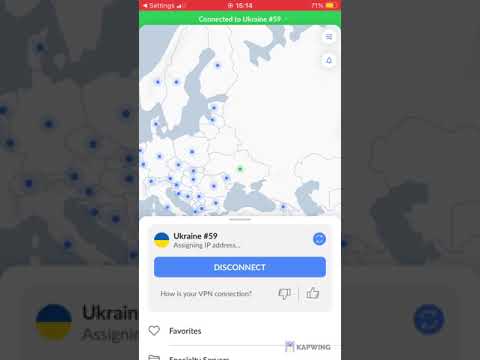
Here’s my 2021 screen recording of NordVPN connecting in Russia on my iPhone, from before the blocks:
What to Try Instead in Russia
These are the options that still report working there, as of January 2026 (TechRadar):
- Proton VPN says its Stealth protocol resists the deep packet inspection Russia uses and still works for many users, though Russia has blocked the IP addresses of many VPN servers, so it can take several attempts to connect.
- ExpressVPN says connectivity in Russia “remains generally functional”, though conditions change over time.
- Tools built for Russia’s blocks, which disguise VPN traffic as ordinary web traffic, such as apps using the VLESS protocol or Amnezia’s open-source AmneziaWG, are what Amnezia’s founder says generally still work.
Whichever you pick, set it up and test it before you travel, keep a second option, and use the provider’s 30-day money-back guarantee if it doesn’t work for you.
Can You Use NordVPN to Access LinkedIn from Russia?
Not anymore. LinkedIn has been blocked in Russia since November 2016 for not storing Russian users’ data in Russia (Reuters via Fortune), and many Russian companies still use it over VPNs.
In my 2021 test, NordVPN opened LinkedIn from Moscow in both a desktop and a mobile browser (screenshot below). With NordVPN no longer operating in Russia, you’ll need a VPN that still connects there.

Can You Use NordVPN to Get a Russian IP Address?
No. NordVPN has had no Russian servers since 2019, so it can’t give you a Russian IP address.
Does NordVPN Work with Netflix in Russia?
There’s no Russian Netflix left to watch: Netflix suspended its service in Russia on 6 March 2022, after the invasion of Ukraine (Variety). If you’re visiting with an account from home, Netflix sees the country of the VPN server you connect to, but in Russia you first need a VPN that connects at all.
Conclusion
No, NordVPN doesn’t work reliably in Russia, and the company says it no longer operates there. It closed its Russian servers in 2019, Russia’s regulator announced a block on it in 2021, and Apple removed its app from the Russian App Store in 2024.
NordVPN is still our top pick in most other countries (see our NordVPN review). For a trip to Russia, try one of the options above before you go, and keep the refund window in mind.